
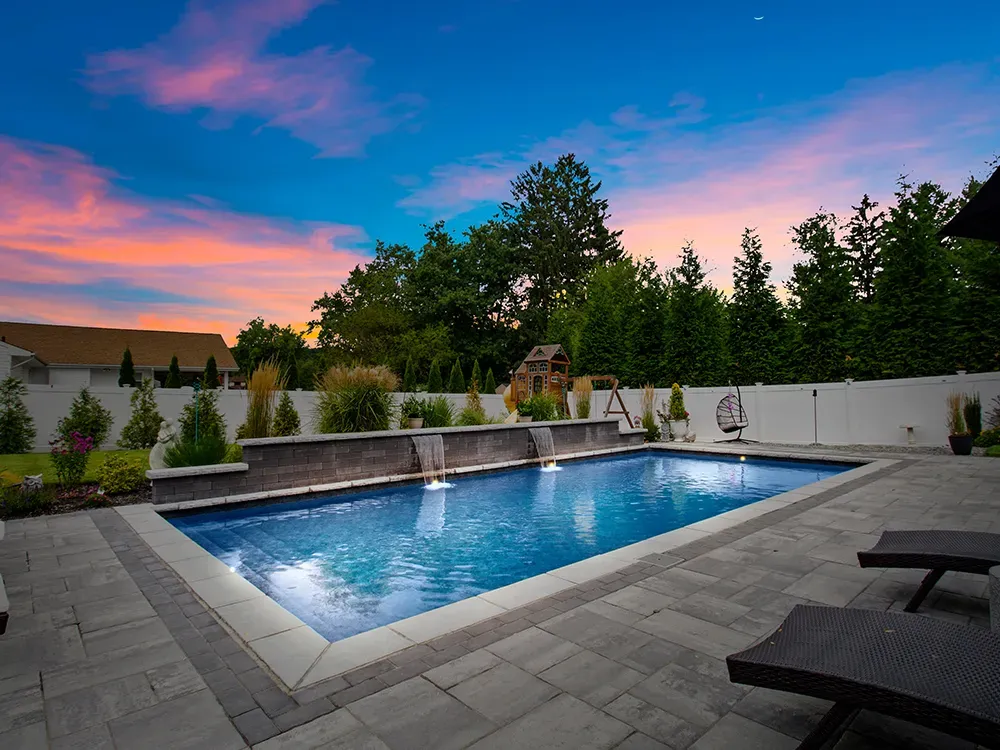
Most families start thinking about a pool on the first hot day of summer. By then, it is usually too late to swim in it that year. Understanding the inground pool construction timeline helps you plan the right way, so your pool is ready when the weather is.
This guide walks through each phase of a custom build in Bergen, Essex, Morris and Passaic County. We also cover what slows projects down and why fall is often the smartest time to begin.
The Inground Pool Construction Timeline at a Glance
Every property is different. Still, a custom gunite pool in North Jersey typically takes several months from the first meeting to the first swim. Design and permits often take the first stretch of that time. Active construction usually runs about 8 to 14 weeks once digging begins, depending on weather, rock and the scope of the patio and features.
Simple projects on open, level lots move faster. Complex backyards with rock, slopes or outdoor kitchens take longer. A clear inground pool construction timeline from your builder should reflect your actual site, not a generic promise.
Phase 1: Consultation and Design
Everything starts with a site visit. Your builder studies the yard, access, slopes and sun exposure, then learns how your family wants to use the space. From there, the design process turns ideas into drawings and 3D renderings you can review and adjust.
This phase can move quickly or take a few weeks, depending on how many revisions you want. Investing time here saves time later. Changes on paper are easy. Changes after concrete is sprayed are not.
Phase 2: Permits and Approvals
Once the design is final, the site plan goes to your town for zoning and permit review. Timing depends on the municipality and the season. Spring is the busiest time for construction offices across North Jersey, so applications submitted in fall and winter often move faster.
If your plan needs a variance for setbacks or lot coverage, expect this phase to stretch longer. Your builder should flag that risk during pool design.
Phase 3: Excavation and Site Work
Digging day is when the project feels real. Utilities are marked, the layout is staked and the crew begins excavation and site work. On a clear lot, this can take just a few days.
North Jersey adds a twist. Many properties in Morris and Passaic County sit on rock that must be hammered out. Sloped lots in towns like Wayne and Kinnelon may need retaining walls. Solid drainage and grading work often happens at this stage as well. Rock is the single biggest wild card in any inground pool construction timeline here.
Phase 4: Steel, Plumbing and Gunite
Next, the crew ties a grid of steel rebar that shapes the pool, spa and steps. Plumbing lines and electrical bonding go in before inspection. After the steel passes, gunite is sprayed over the frame to form the shell.
The shell then needs time to cure before heavy finish work begins. This waiting period is normal and important for long-term strength. It is also why a classic swimming pool built with concrete takes longer than a factory shell, and lasts accordingly.
Phase 5: Coping, Tile, Masonry and Decking
With the shell cured, the space starts to look finished. Waterline tile, stone coping and any raised walls or water features go in. Then the pool patio and surround is built.
For larger backyards, this phase can overlap with kitchens, pavilions or fire features. It is often the longest stretch of active construction, especially for projects with a lot of natural stone.
Phase 6: Equipment, Fencing and Inspections
Pumps, filters, heaters and automation are installed and connected. The code-required pool barrier goes up. Inspectors review the electrical work, the barrier and the overall installation. Inspections are scheduled through your town, so a builder who coordinates them closely keeps the project moving.
Phase 7: Interior Finish and Startup
Finally, the interior finish is applied and the pool is filled. The water is balanced carefully over the first weeks to protect the new surface. Once final inspection passes, it is time to swim. Many families use this last stretch to add furniture, planting and small lighting touches, so the space feels complete on the very first day.
What Can Slow a Pool Project Down
Several factors can stretch the inground pool construction timeline:
- Extended rain or frozen ground
- Unexpected rock or poor soil
- Permit backlogs or variance hearings
- Design changes after construction starts
- Long lead times on specialty stone or equipment
A builder with in-house crews can usually adapt faster, because they are not waiting on outside subcontractors to fit you into their schedules.
Why Fall Is the Best Time to Start
If you want to swim next summer, the planning should begin in the fall. Designing in autumn lets you submit permits before the spring rush. Depending on weather, excavation and structural work can begin in late fall, over the winter or in early spring. That puts your project at the front of the line when finish work season arrives. Working backward from Memorial Day is the easiest way to sketch your own inground pool construction timeline.
Families in Bergen, Essex, Morris and Passaic County who wait until May often find the calendar already full. Starting early is the simplest way to protect your summer.
Start Your Project With GD Group
GD Group has built custom pools across Northern New Jersey for more than 25 years, and our own crews handle every phase from excavation to the final finish. Read what homeowners say in our customer reviews. Thinking about updating an older pool instead? A swimming pool renovation follows a shorter path. When you are ready, book a design consultation and we will map out a timeline built around your yard.
Frequently Asked Questions
How long does it take to build an inground pool in NJ?
A custom gunite pool typically takes several months from design to first swim. Active construction often runs about 8 to 14 weeks. Permits, rock and weather can shorten or extend that window.
When should I start planning a pool to swim by summer?
Fall is ideal. Designing and permitting in autumn and winter puts you ahead of the spring rush. Waiting until late spring often pushes completion into late summer or the following year.
Can pools be built during the winter in New Jersey?
Some phases can, depending on conditions. Excavation and structural work may continue on workable days. Finish work like plaster and certain masonry needs warmer temperatures.
What causes the most delays in pool construction?
Rock, weather and permit timing are the most common causes. Mid-project design changes also add time. A detailed design and experienced in-house crews help keep things on track.
Does an indoor pool take longer to build?
Usually, yes. An indoor swimming pool involves building or modifying a structure, plus ventilation and humidity control. Planning and construction typically take longer than an outdoor pool.
Schedule a Free Design Consultation