If you are planning a new backyard pool in Bergen, Essex, Morris or Passaic County, you will reach a big fork in the road early on: gunite vs fiberglass pool construction. Both options put water in your yard. They are built in very different ways, though, and North Jersey’s rocky soil, sloped lots and hard winters make those differences matter more here than in warmer states.
At GD Group, we have designed and built custom inground pools across Northern New Jersey for more than 25 years. This guide walks through how each pool type is made, how it holds up, and which one tends to fit the way North Jersey families actually live outside.
What Is a Gunite Pool?
A gunite pool is a concrete pool built on site. The crew excavates the shape, ties a grid of steel rebar, then sprays a concrete mix over that frame at high pressure. Once the shell cures, it is finished with plaster, pebble aggregate or tile.
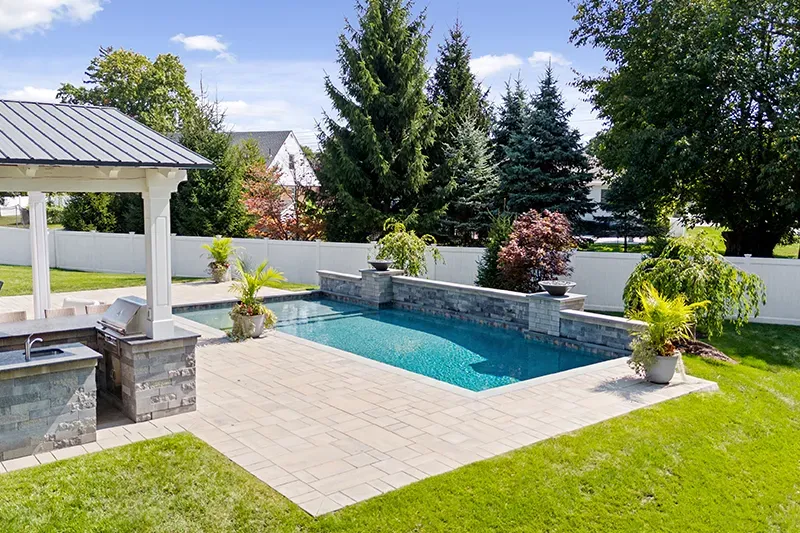
Because it is formed in place, a gunite pool can take almost any shape, depth or size. Sun shelves, built-in benches, spas, vanishing edges and swim-up bars all become part of the same structure. That flexibility is why most custom inground pools are concrete.
What Is a Fiberglass Pool?
A fiberglass pool is a one-piece shell made in a factory. It arrives on a truck, gets lifted by crane and is set into a prepared hole. The surface is a smooth gelcoat, so there is no plaster to refinish later.
The tradeoff is choice. You pick from a manufacturer’s catalog of shapes. Shells also have to travel by road, so most top out around 16 feet wide. If the pool you picture is bigger or more unusual than a stock mold, fiberglass is off the table.
Gunite vs Fiberglass Pool: How They Compare in North Jersey
Here is how the gunite vs fiberglass pool decision breaks down on the points our clients ask about most.
Design Freedom
Gunite wins clearly. You can shape the pool around your home’s architecture, your lot lines and the way you entertain. A classic geometric pool in Ridgewood and a freeform lagoon in Kinnelon can both be gunite. Fiberglass limits you to the molds available that year.
Durability Through Freeze and Thaw
Both types can last for decades when they are installed correctly. The key word is correctly. North Jersey ground freezes, thaws and shifts every year. A gunite shell with a properly engineered steel frame is extremely strong. A fiberglass shell depends heavily on how well the base and backfill were prepared.
Installation and Site Access
Fiberglass often installs faster once the shell is delivered. However, it needs a clear path for a crane and a very wide load. On a tight Montclair lot or a wooded Morris County property, that path may not exist. Gunite equipment fits through smaller openings, and the shell is built right where it sits.
Surfaces and Upkeep
Fiberglass gelcoat is smooth and resists algae, which can mean fewer chemicals. Gunite finishes are more porous and will need resurfacing down the road. Modern pebble and quartz finishes last far longer than old white plaster, though. Many owners also pair a gunite pool with a saltwater system for softer water and simpler daily care.
Long-Term Value
In established neighborhoods across Bergen and Essex County, buyers expect a pool that looks like it belongs to the house. A custom gunite pool tied into the patio, lighting and landscape usually reads as a permanent upgrade. A stock fiberglass shape can feel like an add-on.
Where Vinyl Liner Pools Fit In
Vinyl liner pools are the third common option in New Jersey. They use wall panels and a replaceable vinyl liner. The upfront cost is often lower. On the other hand, liners wear out and need replacement over time, and sharp objects or pet claws can damage them. For homeowners who want a lasting, fully custom backyard, vinyl usually serves as a budget alternative rather than a true competitor.
Why North Jersey Terrain Changes the Answer
Your property often settles the gunite vs fiberglass pool question before you do. Much of Passaic and Morris County sits on rock, and many lots in Wayne, Montville and Kinnelon slope hard toward the back. Those conditions call for careful excavation and site work, and sometimes rock hammering or retaining walls.
Water is the other big factor. A pool set into a hillside needs a plan for runoff so the deck and shell stay stable. Good drainage and grading protects the investment no matter which pool type you choose. Gunite handles these challenges well because the structure is engineered for your exact site instead of a factory template.
How to Choose the Right Pool Type
The best way to settle the gunite vs fiberglass pool debate is to start with how you want to use the space. Then ask yourself a few simple questions:
- Do you want a unique shape, a raised spa or a vanishing edge?
- Does your yard have slopes, rock or tight access?
- Do you plan to stay in the home for 10 years or more?
- How important is the look of the pool within the whole backyard?
If you answered yes to most of these, gunite is likely the better fit. A strong swimming pool design process will show you the options in 3D before any digging starts. It also helps to picture the finished space as a whole. The patio and pool surround often shapes daily use as much as the water itself.
Already have an older pool? You may not need to start from scratch. A swimming pool renovation can update the shape, finish and features of an existing concrete shell.
Talk Through Your Options With GD Group
The gunite vs fiberglass pool choice gets much easier when someone walks your actual property with you. GD Group serves homeowners throughout Bergen, Essex, Morris and Passaic County, and our own crews handle design, excavation, masonry and finishing. Browse our swimming pool gallery for inspiration, then request a design consultation to see what your backyard can become.
Frequently Asked Questions
Is a gunite pool better than fiberglass in New Jersey?
For custom designs and challenging lots, gunite is usually the stronger choice. It can be engineered for rock, slopes and freeze-thaw movement. Fiberglass works well for simple layouts with easy crane access.
How long does a gunite pool last?
A well-built gunite shell can last for many decades. The interior finish is what wears, and it typically needs resurfacing after years of use. Pebble and quartz finishes tend to outlast standard plaster.
Can you install a fiberglass pool on a sloped yard?
It is possible, but it usually requires retaining walls and careful backfill. The shell cannot adapt to the grade. A gunite pool can be designed to work with the slope, including raised walls or a spillover spa.
Which pool type needs less maintenance?
Fiberglass has a smooth surface that resists algae, so routine care can be lighter. Gunite needs regular brushing and eventual resurfacing. Automation and a saltwater system make gunite care much simpler.
Does GD Group build pools in Bergen, Essex, Morris and Passaic County?
Yes. GD Group designs and builds custom inground pools throughout Northern New Jersey, including all four counties. Our own crews handle the full project, from excavation to the final finish.
Schedule a Free Design Consultation