
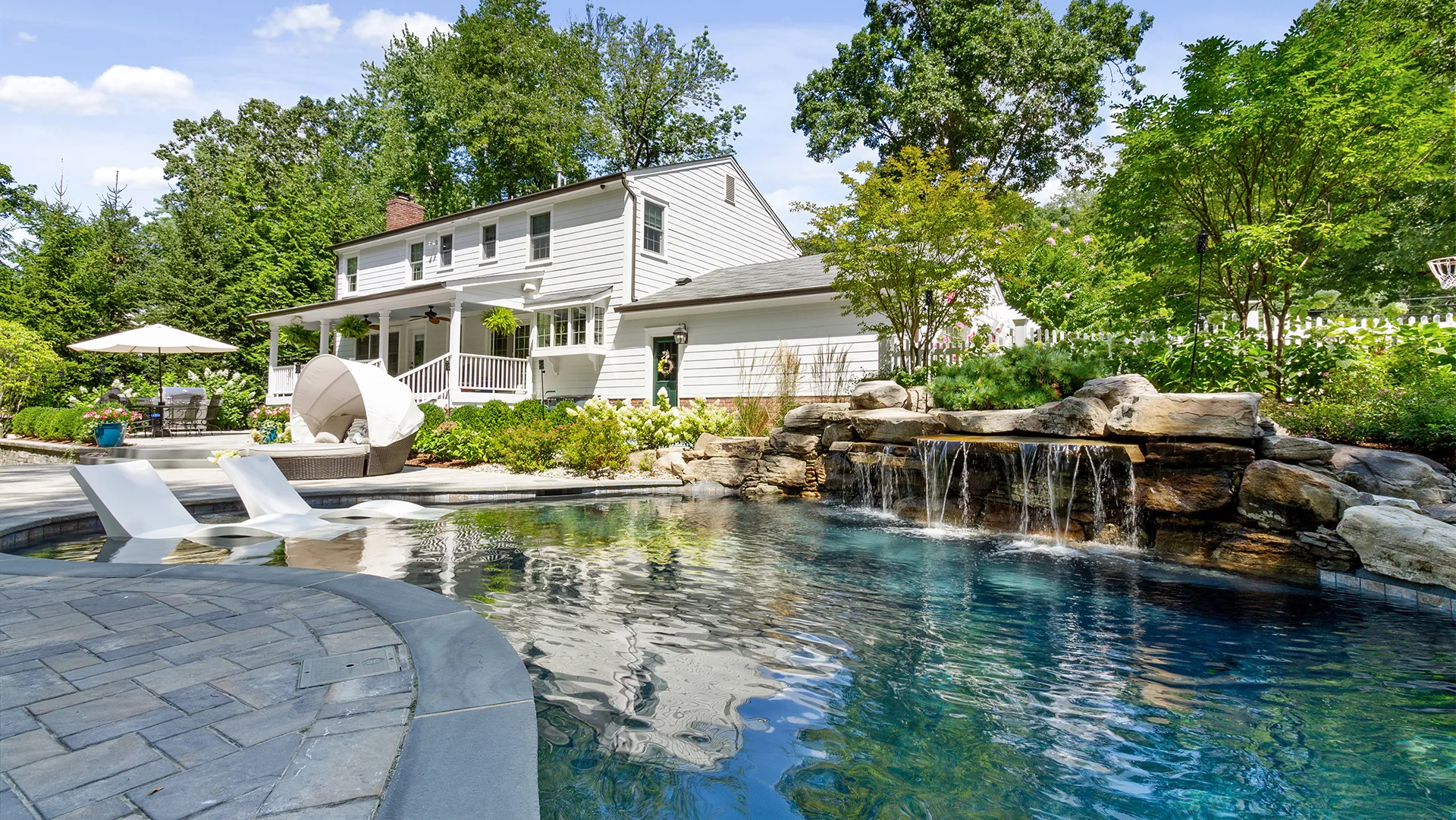
Not every pool needs to announce itself. Some of the most striking designs are the ones that feel like they were always part of the landscape — where the water, the stone, and the plantings work together so seamlessly that the pool reads less like an addition and more like a natural extension of the yard.
If you’re drawn to a softer, organic aesthetic rather than a sharp, geometric look, here’s how natural pool design brings that vision to life.
Start With a Freeform Shape
Rectangular and geometric pools have their place, but a natural design almost always starts with a freeform shape — curved edges, irregular lines, and a silhouette that mimics a pond or lagoon rather than a manufactured structure. These organic shapes make it easier for the pool to sit comfortably within existing landscaping instead of standing apart from it.
Freeform shapes also open up creative possibilities for the shoreline itself, allowing for coves, inlets, or a gradual entry that feels more like stepping into a natural body of water than climbing down a ladder.
Choose Natural Stone Over Manufactured Materials
The materials surrounding a pool do as much work as the water itself when it comes to a natural look. Fieldstone, flagstone, and natural boulders — used for coping, decking, or accent walls — blend into a backyard in a way that manufactured pavers or bright white concrete simply can’t replicate.
Uneven, textured stone placed intentionally around the water’s edge also helps disguise the transition between pool and landscape, reinforcing the idea that the water was always meant to be there.
Use Native and Layered Landscaping
Plantings make or break a natural pool design. Native grasses, layered greenery, and trees positioned close to the water’s edge soften hard lines and give the pool a sense of depth and privacy. Unlike manicured, symmetrical landscaping, a natural design leans into varied heights and textures — taller plantings toward the back, low groundcover near the water, and stone or gravel pathways woven through.
This layered approach also helps the pool feel like it’s tucked into an established landscape rather than sitting in an open, exposed yard.
Add a Waterfall or Rock Feature
Few elements reinforce a natural aesthetic like a rock waterfall. Built from natural stone and positioned to look like an organic outcropping, a waterfall feature adds movement, sound, and visual texture — while also disguising equipment or structural elements that might otherwise interrupt the natural feel.
Even a small, well-placed rock feature can shift a pool’s entire character, turning it from a static rectangle of water into a dynamic, living part of the backyard.
Blend the Deep End Into the Surrounding Grade
One of the most effective natural design tricks is minimizing the visual break between the pool and the surrounding yard. Instead of a hard-edged deck that stops abruptly at the water, gradual grading, tucked-in stone, and thoughtfully placed plantings help the pool disappear into its surroundings — especially when viewed from a distance.
A Natural Look, Built With Precision
Natural doesn’t mean unplanned. In fact, a design that looks effortless usually takes more precision than a straight-edged rectangular pool — every curve, stone placement, and plant choice has to work together to create that organic feel.
At GD Group, our team designs and builds every element in-house, from the shape of the pool to the placement of each stone and plant, ensuring a natural aesthetic that feels intentional from every angle.
Ready to design a pool that blends beautifully into your backyard?
Schedule a Free Design Consultation